
Featured Case Study #1:
The Anatomy of an Empowered Classroom

Bridging 19th-Century Wisdom and 21st-Century Cognitive Science
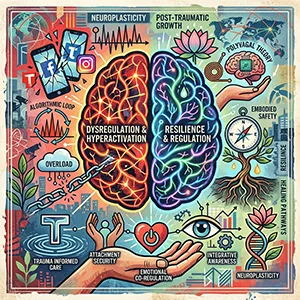
In an era of perpetual "information overwhelm," the modern learner’s brain is often operating in a state of high-alert. When the brain is under stress, the prefrontal cortex—the seat of executive function—is the first to go "offline," leaving the amygdala in control.
Read More
 In an era of perpetual "information overwhelm," the modern learner’s brain is often operating in a state of high-alert. When the brain is under stress, the prefrontal cortex—the seat of executive function—is the first to go "offline," leaving the amygdala in control.
The Challenge: Traditional instructional design often assumes a "rested" brain. This leads to rigid architectures that, like a bridge without a suspension system, suffer structural failure under the weight of learner stress.
The Foundation: Long before modern fMRIs, Ellen G. White identified the brain as the "citadel of the being." By advocating for "system and order," she pre-empted modern Cognitive Load Theory, seeking to protect the learner's "nerve-and-brain power" from unnecessary burdens.
Key Takeaways:
- Comparative Research: Analyzed provincial eLearning frameworks (Ontario vs. Alberta) to identify structural gaps in student wellness and digital infrastructure.
- Award-Winning Engagement: Developed a flagship course at FWCU that achieved a 98.6% completion rate, far exceeding standard benchmarks for online higher education.
- Neuro-Architectural Design: Successfully implemented a "Healing" framework that prevents the amygdala hijack, ensuring the prefrontal cortex remains "online" for deep learning.
- Scalable Restoration: Demonstrated how trauma-informed principles can be scaled to support thousands of learners without sacrificing academic rigor or "system and order."
Author Notes:
- Research Synthesis: Grounded in a UBC Capstone project analyzing regional educational frameworks and the neurobiology of stress.
- Pedagogical Fusion: Integrates 19th-century "citadel of the mind" pedagogy with 21st-century Cognitive Load Theory.
- Personal Philosophy: Represents the practical application of Agape Learning Design in high-stakes higher education environments.
Proven Impact
Deep Dive: The Research & Pedagogy
Listen to an AI-generated synthesis exploring the neurobiology of stress, Cognitive Load Theory, and the trauma-informed approaches that Agape Learning Experience Design brings to the table.
📝 Show Notes & Key Takeaways
For those on a tight schedule, this deep dive covers the following architectural and neurobiological principles:
- The Suspension Bridge Metaphor: Understanding why rigidity in course design leads to structural failure. We discuss building "flex" into learning paths to accommodate the reality of learner stress.
- The Neurobiology of Learning: How top-down, authoritarian mandates trigger the amygdala, paralyzing the student's ability to engage their prefrontal cortex for deep learning.
- The Historical Parallel: A direct connection between the 19th-century empathetic methodologies of Ellen G. White and modern SAMHSA guidelines for Trauma-Informed Care.
- The Modern Solution: How Agape Learning Design utilizes AI-powered tools and microlearning (such as the Spot the Bot challenge) to lower cortisol and increase active engagement.
📄 The Research Foundation
The audio synthesis above is grounded in a comparative analysis of regional educational frameworks. This document served as the primary "source text" for the deep dive into how architectural choices impact the learner's cognitive state.
The Framework: From Policy to Redemption
Explore the visual roadmap of this pedagogical evolution, connecting systemic research to the trauma-informed "Jesus Method" of instructional design.
(Click the infographic to expand)
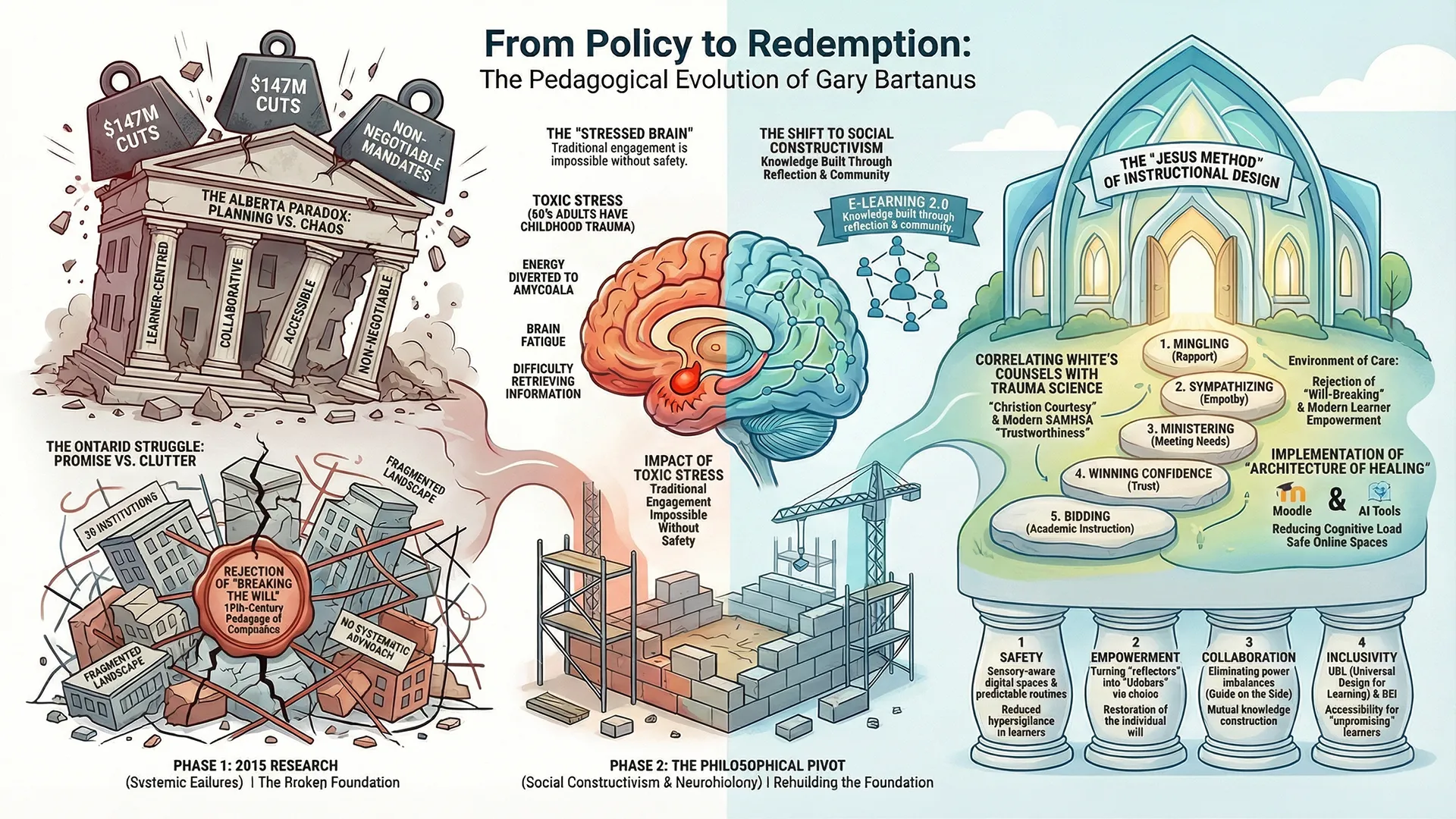
*Visual synthesis and audio deep-dive generated via Google NotebookLM, strictly trained on original UBC Capstone research and FWCU framework data.
(Opens in Lightbox)
The "Citadel" Restored
By aligning Trauma-Informed Design with the foundational principles of "system and order," we move beyond simple instruction. We are building digital spaces that protect the "citadel of the mind," ensuring that even in times of environmental or personal stress, the path to learning remains open, clear, and restorative.